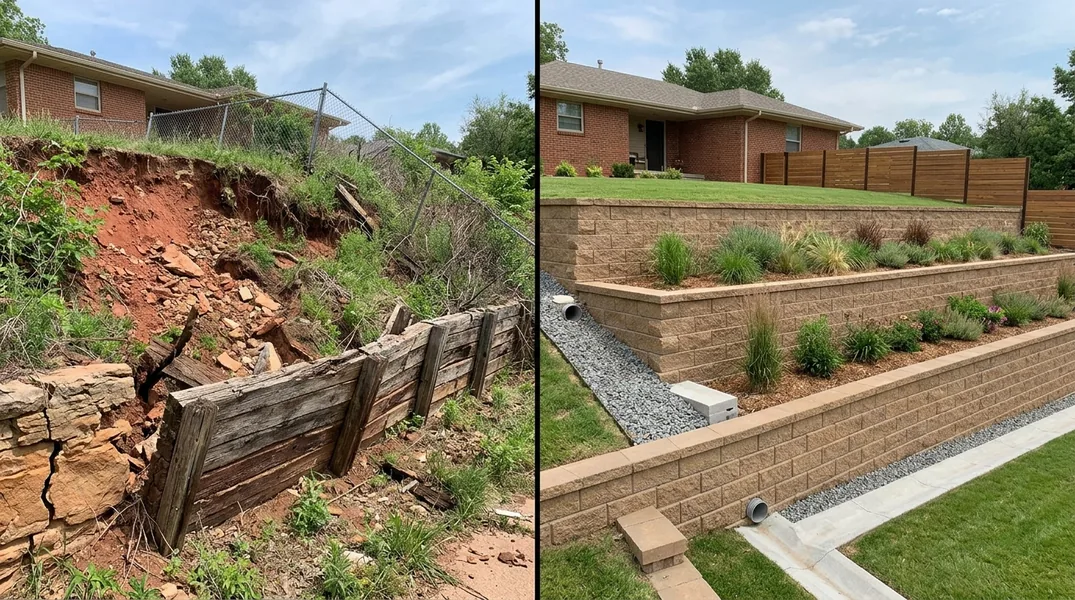
Why Tulsa's Spring Weather Is Tough on Retaining Walls
Spring in Tulsa brings dramatic swings in temperature and heavy rainfall. One day it's 75 degrees and sunny, the next it's below freezing with a driving storm. These rapid changes put enormous stress on retaining walls, especially older ones that may already have minor cracks or drainage issues. Homeowners often notice leaning, bulging, or settling after a particularly wet spring, and that's no coincidence. The combination of saturated soil and repeated freeze-thaw action is one of the most destructive forces a retaining wall can face.
Understanding how these forces work is the first step toward protecting your investment. A retaining wall isn't just a static structure; it's in constant interaction with the soil, water, and weather around it. When those elements become extreme, as they often do in Tulsa, the wall needs proper design and drainage to survive. If you're already seeing warning signs, it may be time to consider Retaining Wall Repair before the next storm season makes things worse.
The Role of Retaining Wall Drainage in Storm Survival
Water is the number one enemy of any retaining wall. When rain falls, it saturates the soil behind the wall. If that water can't escape, it builds up and creates immense pressure. Proper Retaining Wall Installation always includes a well-designed drainage system, but many older walls in Tulsa were built without one. That's why we see so many failing walls after a wet spring. The soil becomes heavy and pushes against the wall with a force it was never designed to handle.
A retaining wall french drain is one of the most effective solutions. This system uses a perforated pipe surrounded by gravel and filter fabric to collect water and channel it away from the wall. When installed correctly, it relieves the pressure before it can cause damage. If your wall doesn't have a French drain, or if the existing drain is clogged, you're essentially waiting for the next big storm to cause a failure. Investing in proper drainage now is far cheaper than dealing with a collapsed wall later.
How Hydrostatic Pressure and Freeze-Thaw Cycles Destroy Walls
Hydrostatic pressure retaining wall problems are extremely common in our area. When water accumulates behind a wall and can't drain, it creates hydrostatic pressure. This pressure pushes outward with tremendous force, often causing walls to crack, tilt, or even collapse. During spring storms, the soil behind the wall can become completely saturated, and if the drainage system is inadequate, the results can be catastrophic. Even a well-built wall can fail if hydrostatic pressure isn't addressed.
Freeze-thaw cycles make matters worse. Water that seeps into small cracks or pores in the wall expands when it freezes. This expansion widens the cracks, and when the ice melts, the damage remains. Repeated cycles throughout late winter and early spring can significantly weaken a wall. In Tulsa, where temperatures frequently fluctuate around freezing, this process happens over and over. Concrete Retaining Walls are particularly susceptible if they aren't properly sealed or if they lack adequate drainage. Over time, the combination of hydrostatic pressure and freeze-thaw can turn a minor issue into a major structural failure.
Warning Signs Your Retaining Wall Is in Trouble
Homeowners should watch for several key warning signs after spring storms. Leaning or bulging is one of the most obvious. If the wall is no longer straight, it's likely experiencing pressure it can't handle. Cracks, especially horizontal ones, are another red flag. Horizontal cracks often indicate that the wall is being pushed outward by soil and water. You might also notice soil erosion around the base or behind the wall, which can undermine its stability. In some cases, water may be pooling at the base of the wall, a clear sign that drainage is failing.
Don't ignore these signs, even if they seem minor. A small crack can quickly become a large one once freeze-thaw cycles take hold. If you're unsure whether your wall is safe, it's worth getting a professional assessment. Retaining Wall Replacement is sometimes the only option if the damage is extensive, but catching problems early can often save you from that expense. A quick inspection now can prevent a much bigger headache later.
Retaining Wall Repair Near Me: When to Call a Professional
If you're searching for "retaining wall repair near me" in Tulsa, you're probably already concerned about your wall's condition. It's smart to call a professional when you see warning signs, especially after a storm. A qualified contractor can assess the wall, identify drainage issues, and recommend the right fix. Sometimes a simple repair, like clearing a clogged French drain or sealing cracks, is enough. Other times, more extensive work may be needed. Either way, getting expert eyes on the problem is the best way to protect your property.
At Tulsa Retaining Wall, we've seen firsthand how quickly spring weather can turn a minor issue into a major problem. Our team can evaluate your wall's drainage, check for hydrostatic pressure issues, and provide a clear plan of action. Whether you need a new installation, repair, or full replacement, we're here to help. Call us at (918) 359-8655 to schedule a free estimate. We're proud to serve homeowners throughout the Tulsa area, including nearby communities like Broken Arrow, Jenks, and Bixby.
Protecting Your Wall Before the Next Storm
Prevention is always better than repair. If your retaining wall is older or you're unsure about its drainage, consider having it inspected before the next storm season. A professional can check for signs of hydrostatic pressure, verify that the French drain is functioning, and recommend improvements. Simple steps like ensuring proper grading and downspout placement can also reduce the amount of water that reaches your wall. If your wall is due for an upgrade, Retaining Wall Replacement with a modern drainage system can save you from future headaches.
Don't wait until your wall is failing to take action. Tulsa's spring weather is unpredictable, and a little preparation goes a long way. If you'd like to discuss pricing or schedule a consultation, reach out to Tulsa Retaining Wall today. We'll help you understand your options and make sure your wall is ready for whatever Mother Nature throws at it.
Looking for a professional retaining wall contractor in Tulsa? Tulsa Retaining Wall responds fast for all your retaining wall needs.
Get a Free QuoteOur services: Retaining Wall Installation · Retaining Wall Repair · Retaining Wall Replacement